Blog
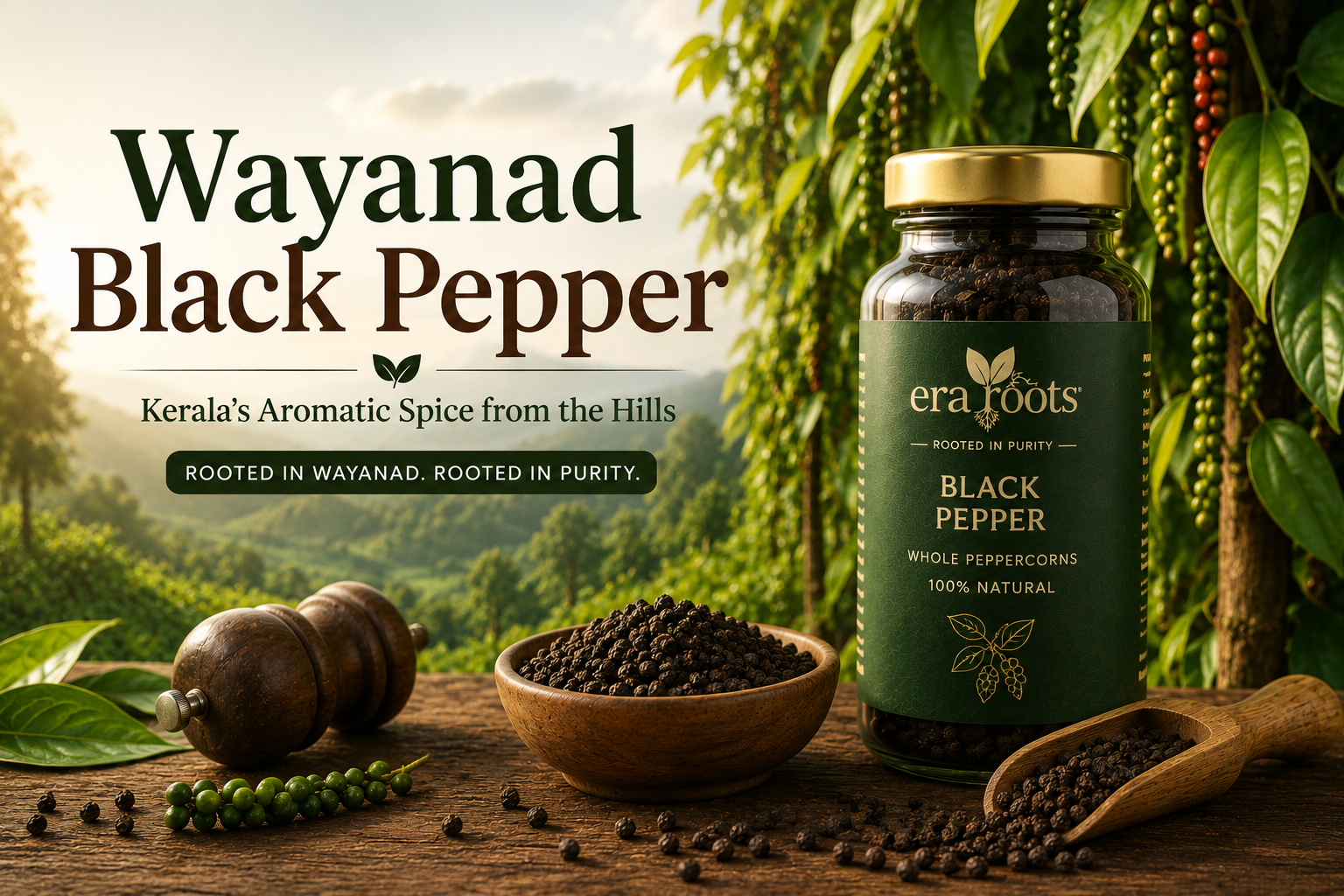
Wayanad Black Pepper: Kerala’s Aromatic Spice from the Hills
Wayanad black pepper carries the character of Kerala's highland spice country. Grown among the hills and agricultural landscapes of Wayanad, black pepper has long been part of the region's farming traditions and Kerala's wider spice heritage.
Known for its bold aroma, warm heat and distinctive flavour, black pepper is one of the most familiar spices in Kerala kitchens. But there is more to a peppercorn than its sharp taste. Its story begins with the pepper vine, the land where it grows, the care given to the crop and the way the harvested berries are processed.
For Era Roots, this connection to Wayanad matters. We believe that understanding where an ingredient comes from is an important part of appreciating what eventually reaches your kitchen.
What Makes Wayanad Special for Black Pepper?
Wayanad is a mountainous district in northern Kerala with a strong agricultural identity. Coffee, black pepper, paddy, banana and several other crops are grown across the region. Kerala Agricultural University identifies black pepper as one of Wayanad's major crops.
The region's highland farming environment has also made pepper an important subject of agricultural research. The Regional Agricultural Research Station at Ambalavayal has a specific research focus on pepper and pepper-based cropping systems in the high ranges.
This agricultural connection is part of what makes Wayanad meaningful to a brand like Era Roots.
Wayanad is not simply a name associated with a product. It represents a landscape where spice cultivation, farming knowledge and Kerala's food traditions come together.
A Spice Deeply Connected to Kerala
Black pepper is one of the spices most strongly associated with Kerala's culinary and agricultural heritage.
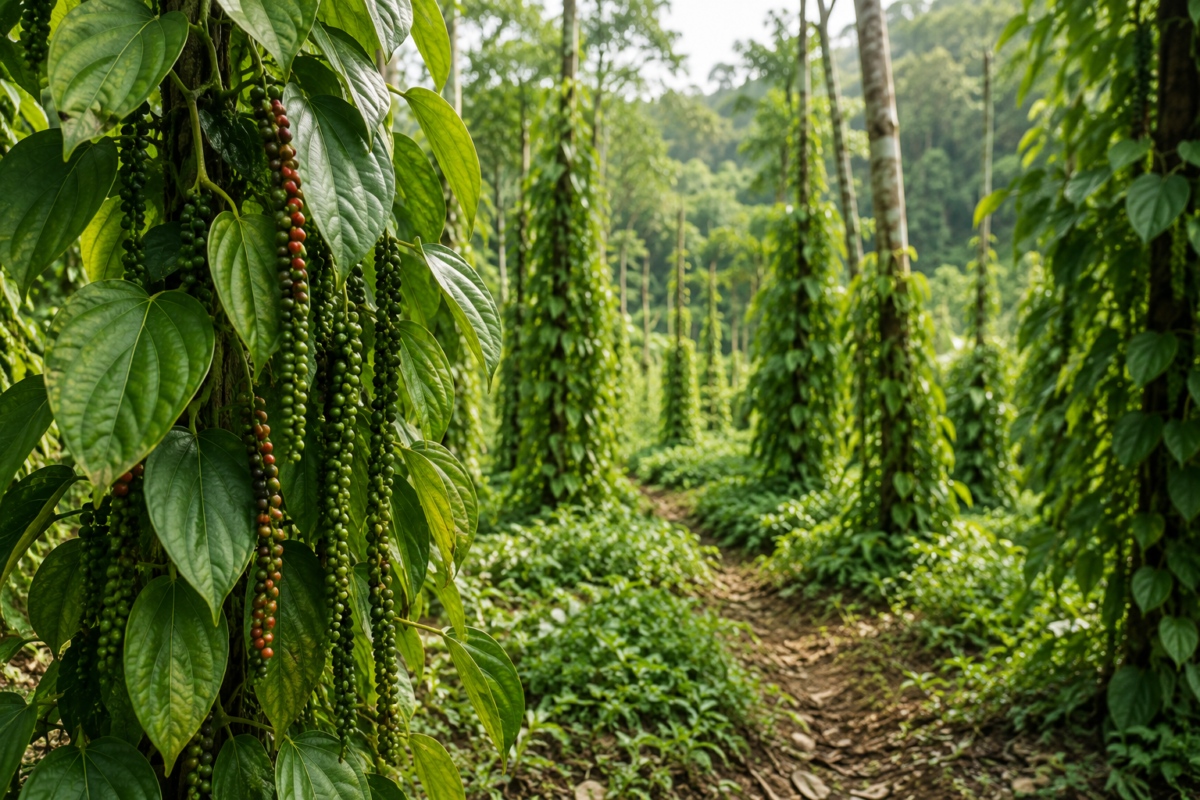
The pepper plant is a climbing vine that grows with support, traditionally making use of suitable trees or other standards. Over time, pepper cultivation has developed into an important part of mixed farming systems across Kerala's high ranges.
Wayanad's farming landscape reflects this tradition. Pepper can be cultivated alongside other crops, including coffee, creating agricultural systems that make use of the same highland environment.
The Regional Agricultural Research Station at Ambalavayal lists both pure pepper cultivation and coffee-plus-pepper mixed cropping among the farming situations found in the high-range zone.
From Pepper Vine to Peppercorn
The journey of black pepper begins with the pepper vine.
Pepper produces clusters of small berries. These berries develop through different stages before being harvested and processed.
For black pepper, mature berries are harvested and processed so that the familiar dark, wrinkled peppercorn develops.
The process may look simple, but careful harvesting, handling, drying and storage all matter when the goal is to preserve the spice's characteristic aroma and flavour.
1. Growing the Pepper Vine
Black pepper is a climbing crop and requires suitable support.
The vine grows upward and produces fruit-bearing shoots. In traditional farming systems, pepper can be grown alongside other crops, making it an important part of Kerala's mixed agricultural landscape.
2. Harvesting
Pepper berries are harvested at the appropriate stage of maturity.
Timing and careful handling are important because the harvested material eventually becomes the dried peppercorn used in cooking.
3. Processing
After harvest, pepper berries undergo processing and drying.
Proper drying is particularly important because moisture management affects storage and the final quality of the spice.
4. Sorting and Handling
Once dried, peppercorns can be sorted and handled to prepare them for storage and use.
Careful handling helps maintain the natural character of the spice from harvest to the finished product.

What Gives Black Pepper Its Character?
The distinctive flavour of black pepper comes from naturally occurring compounds in the peppercorn.
One of the best-known compounds associated with black pepper is piperine, which contributes significantly to its characteristic pungency and heat.
Black pepper also contains volatile compounds that contribute to its aroma.
This combination gives pepper its familiar character: warm, spicy, aromatic and capable of adding depth to both simple and elaborate dishes.
However, the exact sensory qualities of pepper can vary according to factors such as variety, cultivation conditions, maturity, processing and storage.
That is why the phrase “black pepper” does not automatically mean that every peppercorn will taste exactly the same.
Wayanad Black Pepper and Pepper Varieties
Black pepper is not represented by a single variety.
Different pepper cultivars and selections have been developed and evaluated for characteristics such as yield, quality, adaptability and resistance to particular agricultural challenges.
Kerala Agricultural University has a long history of research and breeding work in black pepper, including the development of several improved varieties. Its Pepper Research Station at Panniyur works on crop improvement, crop management and crop protection.
The Spices Board and ICAR-Indian Institute of Spices Research also document several traditional and improved black pepper varieties, including names such as Karimunda, Kottanadan, Narayakodi, Aimpiriyan and Kuthiravally.
This diversity is one reason it is better to talk about the character and origin of Wayanad black pepper rather than suggesting that every pepper product from the region is identical.
What Should You Look for When Buying Black Pepper?
If you are choosing black pepper for your kitchen, origin is only one part of the decision.
Here are some practical things to consider.
Check the Ingredients
For a straightforward black pepper product, the ingredient list should clearly tell you what you are buying.
Avoid products where unnecessary additions are not clearly disclosed.
Consider the Source
Knowing where the pepper comes from adds transparency.
If a product is presented as Wayanad black pepper, look for clear information about its origin and the seller's sourcing practices.
Look at the Appearance
Whole black peppercorns naturally have a dark, wrinkled appearance.
However, appearance alone cannot prove quality or origin.
Consider the Aroma
Fresh, properly stored black pepper should have a noticeable characteristic pepper aroma.
A weak or stale aroma may indicate that the product has lost some of its freshness.
Check the Packaging
Spices need protection from moisture, contamination and unnecessary exposure to air and light.
Good packaging and proper sealing can help protect the product during storage.
Check Product Information
Look for relevant information such as:
- Ingredient details
- Net quantity
- Batch information
- Manufacturing information
- Storage instructions
- FSSAI and other applicable regulatory details
A transparent label helps customers understand what they are purchasing.
Whole Black Pepper or Ground Black Pepper?
Both whole and ground black pepper have their place in the kitchen.
Whole Black Pepper
Whole peppercorns are versatile and can be:
- Freshly ground when required
- Added to spice blends
- Used in marinades
- Added to curries and stews
- Used in traditional Kerala preparations
- Added to soups and broths
Grinding the pepper shortly before use can provide a particularly fresh aroma.
Ground Black Pepper
Ground pepper is convenient for everyday cooking.
It can be used in:
- Soups
- Salads
- Egg dishes
- Meat and vegetable preparations
- Marinades
- Kerala-style curries
- Finishing dishes before serving
The best choice depends on how you cook and how frequently you use pepper.
Why Processing and Storage Matter?
Even a good spice can lose some of its character if it is poorly handled or stored.
Black pepper should be kept away from excessive moisture, heat and prolonged exposure to air.
For ground pepper especially, proper storage is important because grinding increases the surface area exposed to the surrounding environment.
Simple Storage Tips
- Keep the container tightly closed.
- Store in a cool, dry place.
- Protect from moisture.
- Avoid prolonged exposure to direct sunlight.
- Use a clean, dry spoon when required.
- Follow the storage instructions on the product label.
Simple habits can help preserve the aroma and flavour of your black pepper for longer.
Black Pepper in Kerala Cooking
Black pepper is deeply woven into everyday Kerala food culture.
Its warm heat works particularly well with ingredients commonly used in the region.
It can be used in:
- Traditional curries
- Pepper-based preparations
- Meat dishes
- Soups and broths
- Vegetable dishes
- Marinades
- Spice blends
- Chutneys and condiments
Sometimes only a small amount is needed to change the character of a dish.
That is the beauty of black pepper: it does not always need to dominate a recipe. Its warmth can simply add another layer of flavour.
Wayanad Black Pepper: More Than Just a Spice
The story of Wayanad black pepper is also a story about agriculture.
Behind every peppercorn is a chain of activities — cultivation, harvesting, processing, drying, sorting, packaging and storage.
Wayanad's agricultural landscape and its connection with pepper cultivation make the spice especially relevant to the region's identity. Kerala Agricultural University's research station at Ambalavayal maintains black pepper germplasm and conducts research related to pepper and high-range farming systems.
For consumers, this provides an opportunity to look beyond the packet and appreciate the agricultural story behind an everyday ingredient.
Our Approach at Era Roots
At Era Roots, we believe natural products begin with respect for their ingredients.
Our connection to Wayanad influences how we think about sourcing, handling and presenting natural products.
For spices, our focus is simple:
Know the ingredient. Respect its origin. Handle it thoughtfully. Present it honestly.
We believe customers should be able to understand what they are buying, where it comes from and how it fits into their everyday kitchen.
As our collection grows, we aim to bring more of Kerala's natural flavours and agricultural heritage to homes in a simple and thoughtful way.
How to Use Black Pepper in Your Everyday Kitchen
You don't need complicated recipes to enjoy good black pepper.
Try freshly ground black pepper with:
- Warm soups
- Scrambled eggs
- Roasted vegetables
- Salads
- Grilled foods
- Kerala-style curries
- Marinades
- Rice dishes
For the best aroma, consider grinding whole pepper shortly before using it.
Frequently Asked Questions About Wayanad Black Pepper
Yes. Black pepper is one of the major crops of Wayanad, according to Kerala Agricultural University. The region also has dedicated agricultural research focused on pepper and pepper-based cropping systems.
black pepper is an important crop in the region. The high-range farming environment and long association with pepper cultivation contribute to its regional identity.
Piperine is a naturally occurring compound associated with the characteristic pungency and heat of black pepper.
Not necessarily. Kerala has several black pepper cultivars and selections, and pepper characteristics can vary according to variety, cultivation conditions, maturity, processing and storage.
Kerala has several traditional and improved black pepper varieties. Agricultural and spices research sources document varieties and cultivars including Karimunda, Kottanadan, Narayakodi, Aimpiriyan and Kuthiravally, alongside improved varieties developed through breeding programmes.
Keep black pepper tightly sealed in a cool, dry place away from moisture, heat and prolonged direct sunlight.
Neither is universally better. Whole pepper can be ground when needed for a fresher aroma, while ground pepper is convenient for everyday cooking.
Look at the ingredient list, origin information, packaging, product labelling and storage details. Aroma, appearance and freshness can also help, but no single visual characteristic can prove the complete quality or origin of pepper.
Era Roots is connected to Wayanad, Kerala, and our brand is inspired by the region's agricultural heritage and natural products.
From Wayanad, With Care
Some ingredients are more than ingredients.
They carry the story of a place, the work of farmers and the food traditions that have developed around them.
For Era Roots, black pepper is one of those ingredients.
From the pepper vines of Kerala's highlands to the kitchens where a little freshly ground pepper can transform a dish, its journey reflects the connection between land, agriculture and food.
From Wayanad to your home, every Era Roots product carries a story of origin, care and simplicity.
Era Roots — Rooted in Purity.