Spices & Ingredients

Wayanad Coffee: What Makes Coffee from Kerala’s Hills Special?

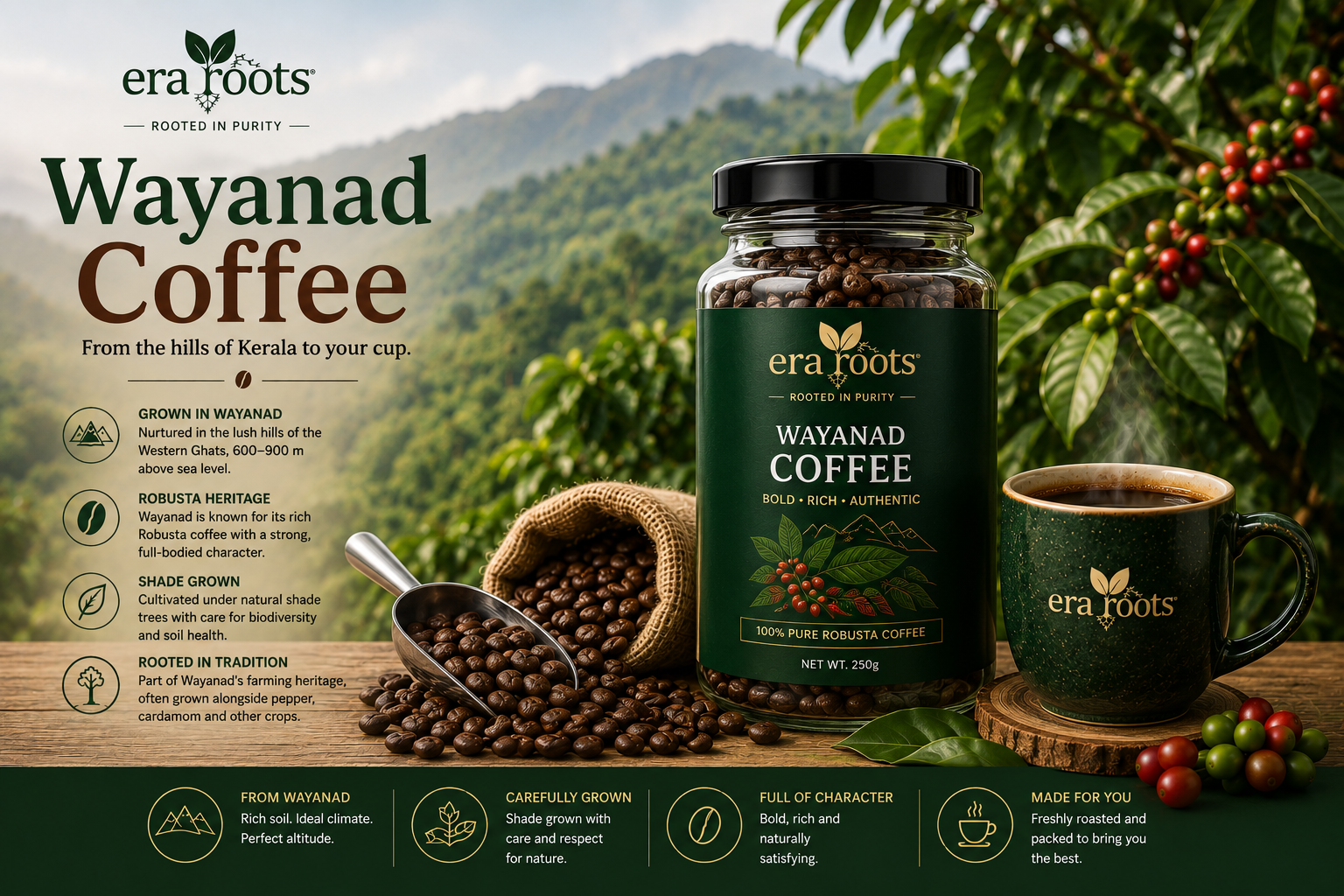
Era Roots Wayanad coffee in glass bottle with coffee beans

There is something special about a cup of coffee grown in the hills of Wayanad, Kerala.

Surrounded by green landscapes, forested hills and traditional farms, Wayanad has become one of Kerala's important coffee-growing regions. Coffee cultivation is closely connected with the agricultural character of the region, where coffee often grows alongside crops such as pepper, banana and other plants.

For Era Roots, Wayanad coffee represents more than just a beverage. It is part of the land, farming traditions and natural character that make Wayanad special.

A Coffee Heritage Rooted in Wayanad

Wayanad lies in the Western Ghats and has conditions that support coffee cultivation.

According to the Coffee Board of India, Wayanad's coffee-growing areas are around 600–900 metres above sea level, with Robusta being the main coffee type grown in the region.

The Coffee Board's current production statistics also show the importance of Wayanad to Kerala's coffee industry. Its 2025–26 final estimate lists 68,800 metric tonnes of Robusta coffee production in Wayanad.

This isn't simply a crop grown in Wayanad. Coffee is deeply woven into the agricultural landscape of the region.

Why Is Wayanad Suitable for Coffee?

Wayanad's landscape offers several natural conditions that support coffee cultivation.

The region's hills, rainfall and warm, humid climate are well suited to Robusta coffee. The Coffee Board notes that Robusta generally performs well under warmer and more humid conditions than Arabica.

Another interesting feature of Indian coffee cultivation is the use of shade trees.

Coffee plants are commonly grown under mixed shade canopies. These trees can help protect coffee plants from temperature fluctuations and contribute to soil and ecological health.

This makes the traditional Wayanad coffee landscape particularly interesting: coffee plantations can exist as part of a diverse agricultural environment rather than as a single-crop landscape.

Wayanad Coffee and Robusta

When people think about coffee, Arabica is often the first name that comes to mind.

But Robusta has an important place in Indian coffee, and Wayanad is particularly associated with it.

The Coffee Board describes Robusta as a coffee with greater strength and notes its importance in blends.

For coffee lovers, this means Wayanad Robusta can offer a different experience from a lighter, more delicate Arabica.

Its character makes it especially interesting for people who enjoy a strong, satisfying everyday cup of coffee.

Coffee Grown Alongside Other Crops

One of the beautiful things about Wayanad's coffee farms is the diversity around the coffee plants.

Coffee plantations in India can include companion crops such as:

  • Black pepper
  • Banana
  • Cardamom
  • Ginger
  • Orange
  • Arecanut
  • Vanilla

The Coffee Board specifically lists pepper, banana, ginger and vegetables among the intercrops associated with Wayanad coffee plantations.

This connection between coffee and other crops is one reason Wayanad's agricultural landscape feels so distinctive.

It also reflects the traditional farming character of the Western Ghats.

From Wayanad Farms to Your Cup

A good cup of coffee begins long before the beans reach your kitchen.

It begins with the coffee plant, the farm, the climate and the people who care for the crop.

After harvesting, coffee goes through several stages before becoming the roasted coffee we know and love. Depending on the processing method, the coffee cherries are processed to separate the beans, followed by drying, grading, roasting and grinding.

Every stage can influence the final character of the coffee.

That's why careful sourcing and processing matter.

At Era Roots, our approach is inspired by the natural heritage of Wayanad and the importance of handling local products with care.

What Makes Era Roots Wayanad Coffee Different?

At Era Roots Farms, our connection to Wayanad is central to the brand.

We want our coffee to reflect the place it comes from — naturally, honestly and without unnecessary complication.

Our focus is on:

Wayanad origin
Inspired by the coffee-growing landscape of Kerala's Western Ghats.

Careful selection
Coffee is selected with attention to quality and consistency.

Thoughtful processing
Careful handling helps preserve the coffee's natural character.

Fresh packing
Proper packaging helps maintain aroma and freshness until it reaches your kitchen.

Rooted in purity
Our philosophy is simple: respect the ingredient and let its natural character speak for itself.

How to Enjoy Wayanad Coffee

Wayanad coffee can be enjoyed in many ways depending on your preferred brewing method.

Try it as:

  • South Indian filter coffee
  • French press
  • Pour-over
  • Moka pot
  • Cold brew
  • Traditional milk coffee

If you enjoy a stronger cup, you can experiment with the coffee-to-water ratio and brewing time until you find the balance that suits you.

A Taste of Wayanad in Every Cup

Wayanad is known for its forests, hills, plantations and agricultural traditions.

Coffee is one part of that larger story.

When you enjoy a cup of Wayanad coffee, you're experiencing something connected to the landscape and farming culture of Kerala's Western Ghats.

At Era Roots, we want to bring that connection a little closer to home.

From the hills of Wayanad to your everyday cup — rooted in purity.

Frequently Asked Questions About Wayanad Coffee

What is Wayanad coffee?

Wayanad coffee is coffee grown in the Wayanad region of Kerala, in the Western Ghats. The region is particularly known for Robusta coffee and its traditional shade-grown coffee plantations.

What type of coffee is mainly grown in Wayanad?

Robusta is the main type of coffee associated with Wayanad. It is known for its stronger, fuller-bodied character and is widely used for both standalone coffee and blends.

Why is Wayanad suitable for coffee cultivation?

Wayanad's hills, climate, rainfall and agricultural environment provide suitable conditions for coffee cultivation. Coffee is also traditionally grown under shade trees in the region.

Is Wayanad coffee Robusta?

Much of Wayanad's coffee production is Robusta, although the region can have other coffee varieties as well. Era Roots Wayanad Coffee should be described as Robusta only if your actual product is 100% Robusta.

What does Wayanad coffee taste like?

Wayanad Robusta can have a bold, rich and full-bodied character, making it suitable for people who enjoy a stronger cup of coffee. The final taste also depends on processing, roasting and brewing.

How can I brew Wayanad coffee?

You can use Wayanad coffee for South Indian filter coffee, French press, pour-over, moka pot or cold brew, depending on the grind and roast of the coffee.

Where can I buy Wayanad coffee?

You can explore Era Roots Wayanad Coffee, inspired by the coffee-growing heritage of Wayanad and Kerala.

Is Wayanad coffee grown in Kerala?

Yes. Wayanad is a coffee-growing region in Kerala, located in the Western Ghats.

What makes Era Roots Wayanad Coffee special?

Era Roots focuses on the connection between Wayanad's agricultural heritage, careful sourcing, thoughtful processing and quality packing, bringing the character of the region closer to your everyday cup.

Can Wayanad coffee be used for Kerala-style filter coffee?

Yes. Robusta coffee is commonly used in South Indian-style filter coffee, either on its own or as part of a blend. Use the brewing ratio and grind recommended for your particular Era Roots coffee product.

Leave a Reply

Your email address will not be published. Required fields are marked *