
Spices & Ingredients

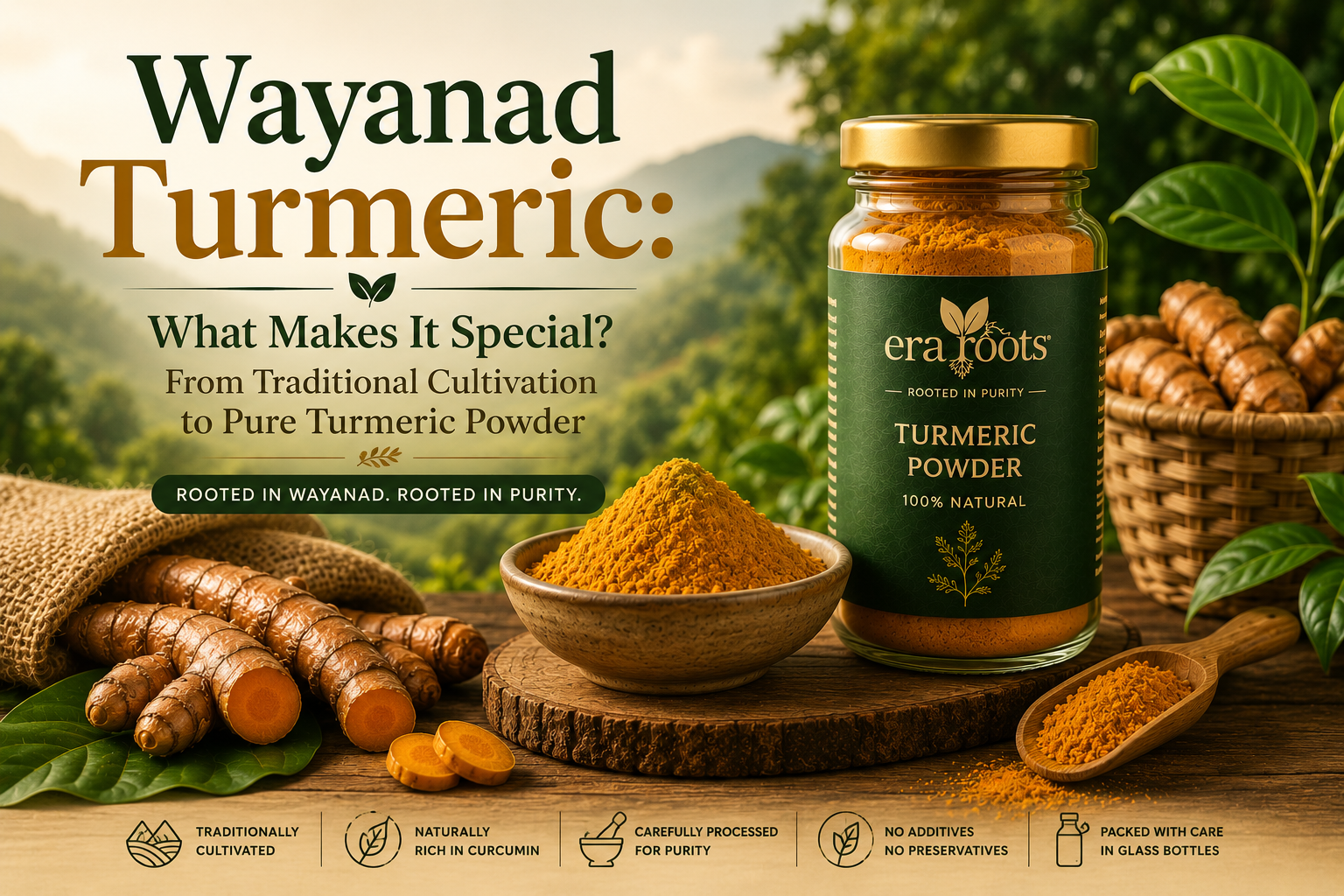
Wayanad Turmeric: What Makes It Special? From Traditional Cultivation to Pure Turmeric Powder

turmeric powder blog by era roots wayanad kerala

Wayanad turmeric carries a story that goes beyond its golden colour. Grown in the hills of Kerala's Wayanad district, turmeric is part of the region's rich agricultural and spice heritage. But what makes traditional Wayanad turmeric interesting, and what should you look for when choosing a quality turmeric powder?

From the character of Wayanad's agricultural landscape to the natural compounds found in turmeric, there is much to explore.

At Era Roots, we believe that a natural product begins with its source. That's why our connection to Wayanad is an important part of our journey from carefully selected ingredients to thoughtfully packed products.

What Makes Wayanad Special for Natural Products?

Wayanad is a mountainous district in northern Kerala known for its agricultural landscapes, forests, plantations and rich biodiversity. The wider Malabar region has a long association with spices including black pepper, ginger, turmeric and cardamom.

This connection between land, agriculture and spices is part of what makes Wayanad meaningful to Era Roots.

The region isn't simply a location on our packaging. It represents a connection to Kerala's agricultural traditions and the natural ingredients that have been part of local food culture for generations.

Wayanad and the Tradition of Turmeric

Turmeric (Curcuma longa) is one of India's most familiar spices. Its rhizomes are traditionally processed and used as a culinary spice, natural colouring ingredient and in various traditional preparations.

Wayanad also has a documented history of turmeric cultivation. Kerala's agricultural statistics record turmeric cultivation across areas including Panamaram, Kalpetta, Mananthavady and Sulthan Bathery.

But Wayanad turmeric has attracted particular interest because of the quality characteristics reported in traditional local varieties.

Wayanad Turmeric and Curcumin: What Does Research Say?

One of the most interesting characteristics of turmeric is curcumin, a naturally occurring curcuminoid responsible for much of turmeric's characteristic yellow colour.

A Kerala Agricultural University study titled Collection and Evaluation of Wayanad Turmeric (Curcuma longa L.) for Yield and Quality examined traditional turmeric accessions from Wayanad.

The study collected 26 traditional accessions from the Mananthavady, Vythiri and Sulthan Bathery areas and evaluated them for yield and quality. It reported that Wayanad local turmeric had an average curcumin content of 9.4% in the material studied.

This is an interesting finding—but it is important to interpret it correctly.

It does not mean that every turmeric product from Wayanad contains exactly 9.4% curcumin. Curcumin content can vary depending on the turmeric variety, cultivation conditions, maturity, processing and other factors.

For Era Roots, this research adds another reason to appreciate the agricultural heritage behind Wayanad turmeric.

What Is Curcumin?

Curcumin is one of the principal bioactive compounds naturally found in turmeric.

It has been extensively studied for its antioxidant and anti-inflammatory properties. Research reviews and clinical meta-analyses have investigated the effects of turmeric and curcumin supplementation on markers associated with oxidative stress and inflammation.

However, research on curcumin supplements or concentrated extracts should not automatically be interpreted as evidence that ordinary culinary turmeric powder produces the same effects.

The amount of curcumin consumed, formulation, absorption and study design can all make a difference.

So, turmeric is best appreciated first and foremost as a traditional culinary spice, while its naturally occurring compounds continue to be studied scientifically.

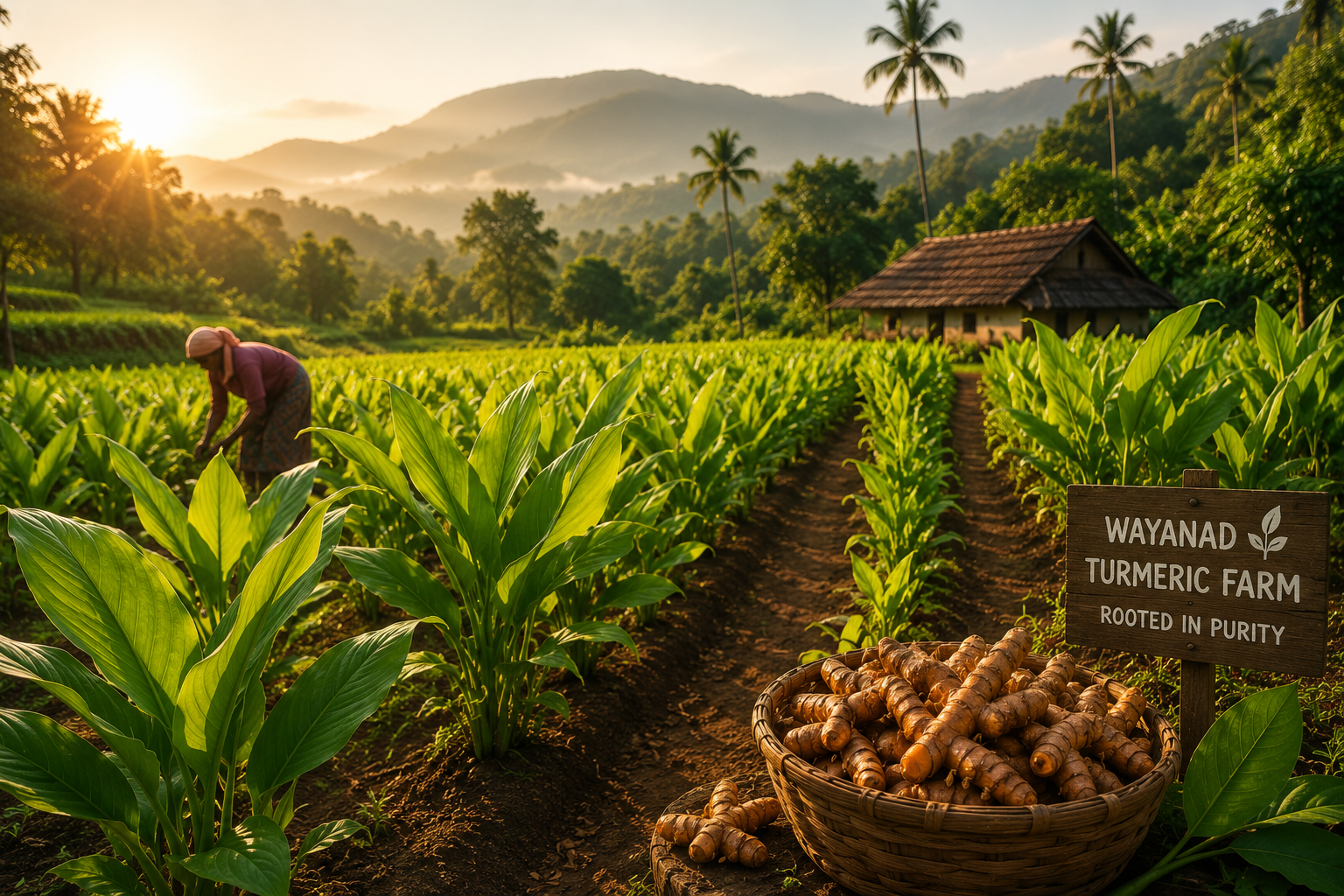
wayanad turmeric farm illustration

Why the Source of Turmeric Matters?

When buying turmeric powder, the ingredient itself is only one part of the story.

The quality of the raw turmeric, handling, cleaning, drying, grinding and storage can all influence the final product.

A good turmeric powder should begin with carefully selected raw material.

At Era Roots, our approach is centred around respecting the ingredient from its source through to the finished product.

From Turmeric Root to Pure Powder

The journey from turmeric rhizome to a bottle of turmeric powder involves several important stages.

1. Careful Selection

The process starts with choosing suitable turmeric.

The quality of the raw material forms the foundation for the finished powder.

2. Cleaning

The turmeric needs to be properly cleaned before further processing.

Removing unwanted soil and impurities is an essential part of responsible food handling.

3. Drying

Proper drying is an important stage in turmeric processing.

Adequate drying helps prepare the turmeric for grinding and supports better storage stability.

4. Grinding

Once appropriately dried, turmeric is ground into a fine powder.

The goal is to produce a convenient spice while retaining the natural character of the ingredient.

5. Quality-Focused Handling

Every stage from raw material to finished powder should be handled with care.

At Era Roots, we believe less unnecessary intervention and thoughtful handling are central to presenting natural products honestly.

6. Glass-Bottle Packaging

We choose glass-bottle packaging for our products because it gives the finished product a clean, premium presentation while providing a sturdy container for storage.

For Era Roots, packaging is not simply about appearance. It is part of how we present the product from our hands to your home.

Why We Care About Pure Turmeric Powder?

The word pure should mean something.

A quality turmeric powder should have turmeric as its primary ingredient, without unnecessary fillers or undisclosed additions.

When choosing turmeric powder, check:

  • The ingredient list
  • Product origin
  • Packaging information
  • Manufacturing details
  • Storage instructions
  • Batch information
  • The reputation and transparency of the seller

A bright yellow colour alone cannot tell you everything about turmeric quality.

How to Recognise Quality Turmeric Powder?

There isn't one simple home test that can prove turmeric purity or determine its curcumin concentration.

Instead, look at the complete product.

Check the Ingredients

A simple ingredient list is a good starting point.

Look at the Source

Knowing where the turmeric comes from adds transparency to your purchase.

Check the Packaging

Good packaging should protect the product from moisture, contamination and unnecessary exposure.

Look for Batch and Product Information

A properly labelled product should provide relevant information that allows you to understand what you're buying.

Don't Judge Quality by Colour Alone

Turmeric's natural colour varies, and colour alone cannot establish purity or curcumin concentration.

For a verified curcumin percentage, laboratory testing is the appropriate method.

Why Wayanad Matters to Era Roots?

For Era Roots, Wayanad isn't just part of our address.

It is part of our identity.

The region's agricultural traditions, spice heritage and natural landscape inspire the way we think about natural products.

We want to build a brand that connects the richness of Kerala with modern customers looking for thoughtfully sourced and carefully handled products.

From Wayanad to your home, every Era Roots product carries a story of origin, care and simplicity.

How to Store Turmeric Powder?

Once you bring turmeric powder home, proper storage can help maintain its quality.

  • Keep the bottle tightly closed.
  • Store it in a cool, dry place.
  • Keep it away from moisture.
  • Avoid prolonged exposure to direct sunlight.
  • Always use a clean, dry spoon.
  • Follow the storage instructions on the product label.

Because turmeric powder is sensitive to moisture, keeping the container properly sealed is particularly important.

FAQ

Is Wayanad turmeric special?

Wayanad has a long agricultural and spice heritage, and traditional Wayanad turmeric has been scientifically evaluated for yield and quality. A Kerala Agricultural University study reported an average curcumin content of 9.4% in the traditional Wayanad turmeric material it studied.

What is curcumin in turmeric?

Curcumin is a naturally occurring curcuminoid found in turmeric. It is one of the compounds that has been extensively studied for antioxidant and anti-inflammatory activity.

Does all Wayanad turmeric contain 9.4% curcumin?

No. The 9.4% figure refers to the traditional Wayanad turmeric material evaluated in a Kerala Agricultural University study. Curcumin levels can vary between varieties and growing and processing conditions.

How can I know the curcumin percentage of my turmeric?

The most reliable way to determine curcumin concentration is laboratory analysis. Appearance or colour alone cannot establish a precise percentage.

How should turmeric powder be stored?

Store it tightly sealed in a cool, dry place away from moisture and direct sunlight.

Is turmeric powder the same as turmeric extract?

No. Turmeric powder is the ground spice, while turmeric extracts are concentrated preparations that may contain substantially different amounts of curcuminoids.

Where does Era Roots come from?

Era Roots is a natural-products brand connected to Wayanad, Kerala, offering carefully selected and thoughtfully packaged natural products.

From Wayanad, With Care

Natural products don't need complicated stories.

Sometimes the story begins with a place.

For Era Roots, that place is Wayanad a landscape connected with agriculture, spices and Kerala's natural heritage.

Our aim is simple: to respect the ingredients we work with, handle them thoughtfully and bring their natural character to your home.

Era Roots — Rooted in Purity.

Leave a Reply

Your email address will not be published. Required fields are marked *